The shampoo sachet already existed before CavinKare.
Velvette Shampoo (the brand C.K. Ranganathan’s family ran) had pioneered small-format packaging. But the lowest price point was still ₹2 to ₹3. For a rural daily-wage household in Tamil Nadu, that was a genuine spending decision requiring deliberation.
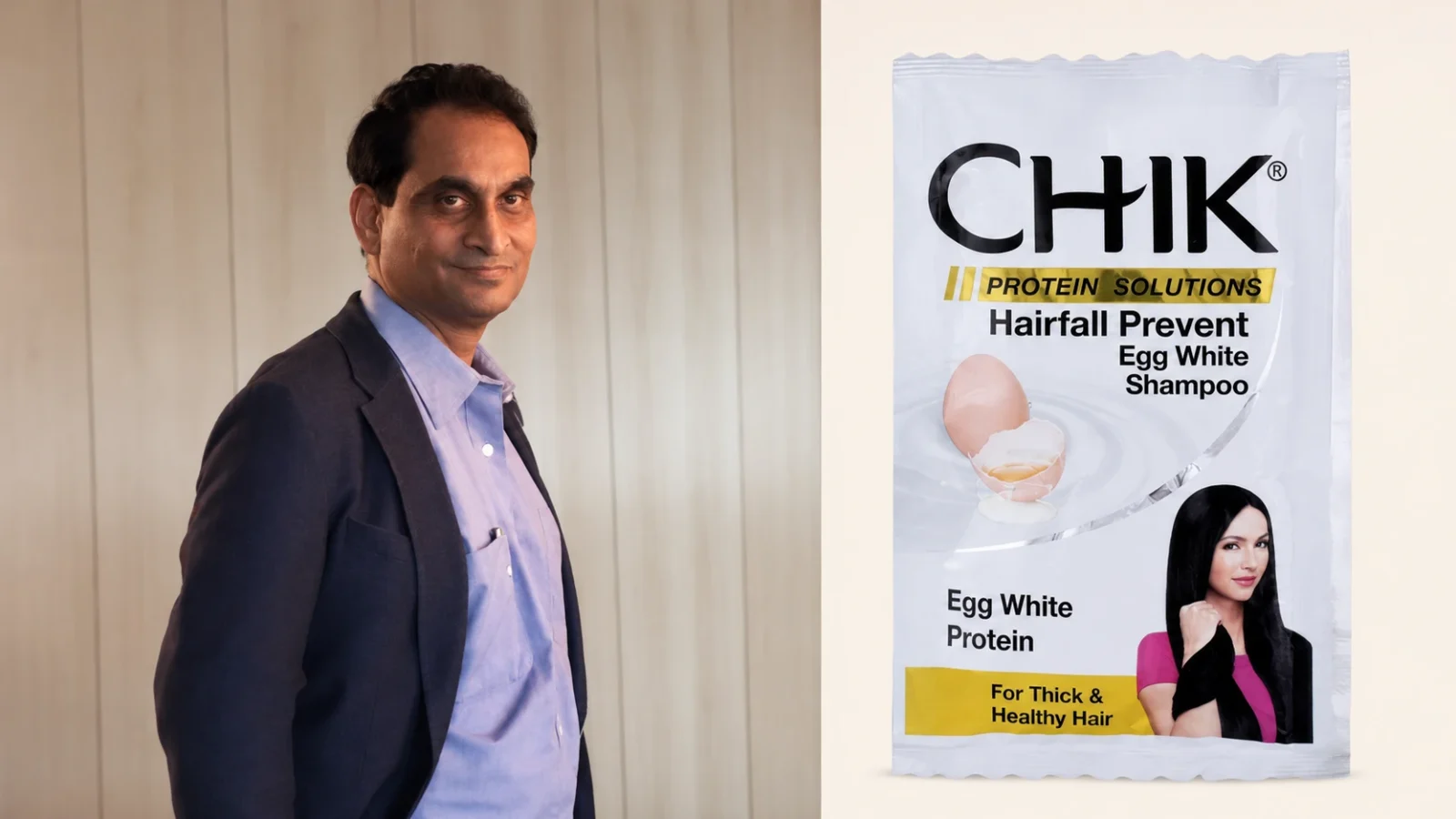
Ranganathan spun off independently and founded Beauty Cosmetics in 1983. His first product was Chik Shampoo in a ₹0.50 sachet. The formulation was simple. The distribution was hyper-local: he personally carried sachets to village shops, taped them to chai counter surfaces, and convinced shop owners to take them on consignment.
The insight was not the sachet. The sachet already existed. The insight was the price point that converts a “purchase” into an “impulse.” At ₹0.50, buying a Chik sachet required no planning. It was an in-the-moment choice available to anyone.
That price point unlocked a consumer who had previously used soap, reetha, or nothing to wash their hair. Chik was not competing against Head and Shoulders. It was creating the category from scratch in a market of hundreds of millions of people.
How Paper Boat found its market by identifying what global FMCG brands had overlooked in their product development and consumer research shows the same structure: the biggest opportunity is often the consumer no incumbent is talking to.
Within a decade, the sachet model had been adopted by HUL (Clinic Plus), Procter and Gamble (Pantene), and every major shampoo brand in India. McKinsey later cited the shampoo sachet as one of the most studied bottom-of-pyramid distribution innovations in emerging market history.
Ranganathan renamed the company CavinKare in 1998. The portfolio expanded to Meera (hair care), Fairever (fairness cream), Spinz (deodorant), and Ruchi (pickles). Revenue crossed ₹2,000 crore.
How Ghadi Detergent used identical unit-economics logic in detergent to capture the Hindi belt while multinationals focused on premium segments and urban modern trade shows the same rural affordability strategy scaling across categories with the same result.
The ₹0.50 sachet also forced a fundamental rethink in FMCG strategy: if you cannot profitably sell to the bottom 400 million consumers, a competitor with lower overhead will do it and use those consumers to fund an upgrade journey you cannot participate in.
How Parle-G built its unassailable distribution by making the ₹5 price point a structural moat rather than a margin sacrifice is the third pillar of this story: Indian FMCG’s most durable competitive positions are almost always built from the bottom up, not the top down.