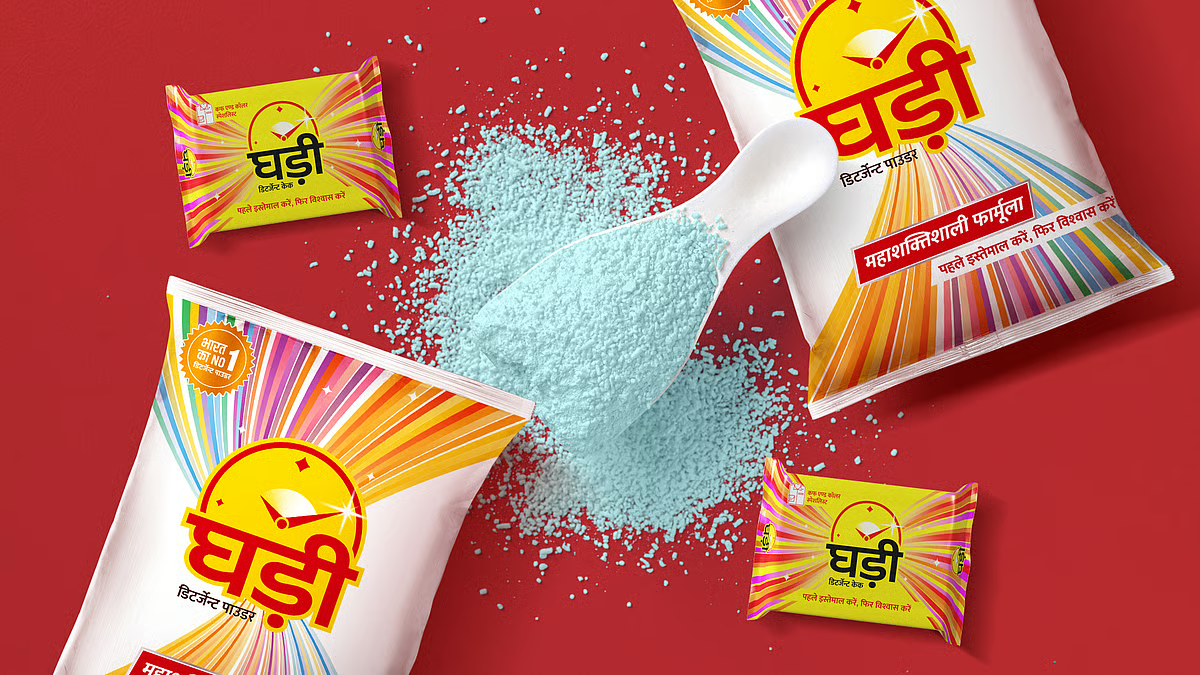
Rohit Surfactants Private Limited started making Ghadi detergent in Kanpur in 1988. It had no ad budget worth mentioning. It had no celebrity endorsement. It had no modern trade presence.
What it had was a price point (₹3 to ₹5 per pack in the 1990s), a distribution team that covered every district in Uttar Pradesh with obsessive intensity, and a product that worked for hand-washing, which is how 90% of Indian households still washed clothes.
The strategy was pure regional depth. While HUL was building a national brand and Procter and Gamble was entering with Ariel, Ghadi went millimetre-deep in UP, Bihar, and Madhya Pradesh. Its field force tracked individual kirana stores the way a salesforce tracks enterprise accounts. Margins were protected. Supply was uninterrupted. Retailers in these markets trusted Ghadi more than they trusted any multinational distributor.
How Parle-G built an unbeatable distribution moat by treating retail like a relationship rather than a transaction shows an identical logic operating in biscuits across the same geography: presence and trust compound faster than advertising.
By 2005, Ghadi had become the category leader in UP by volume. Consumers who could not afford Surf Excel had a brand they could name and trust. The brand name entered daily vocabulary in Hindi-belt households the way Surf had in urban markets.
In 2012, Nielsen data confirmed what Kanpur already knew: Ghadi was India’s largest-selling detergent by volume, ahead of Surf Excel and Wheel.
HUL noticed. It had spent decades managing Wheel as a value brand without giving it the distribution intensity Ghadi had. The response was more advertising, more sampling, more celebrity. It did not close the gap in the core markets Ghadi owned.
How Chik Shampoo captured rural India with sachet pricing while multinationals focused on premium urban consumers shows another regional brand beating multinationals through unit economics and distribution intensity, the same playbook in a different category.
Ghadi’s revenue today exceeds ₹3,000 crore. It remains the category leader in volume across the Hindi belt.
How Marico built Parachute’s market leadership through distribution density before investing significantly in brand advertising completes the picture: in Indian FMCG, availability compounds brand preference. You cannot prefer what you cannot find.
The lesson multinationals keep relearning: India’s largest markets are not where the advertising reaches first. They are where the distribution van goes on Tuesday.