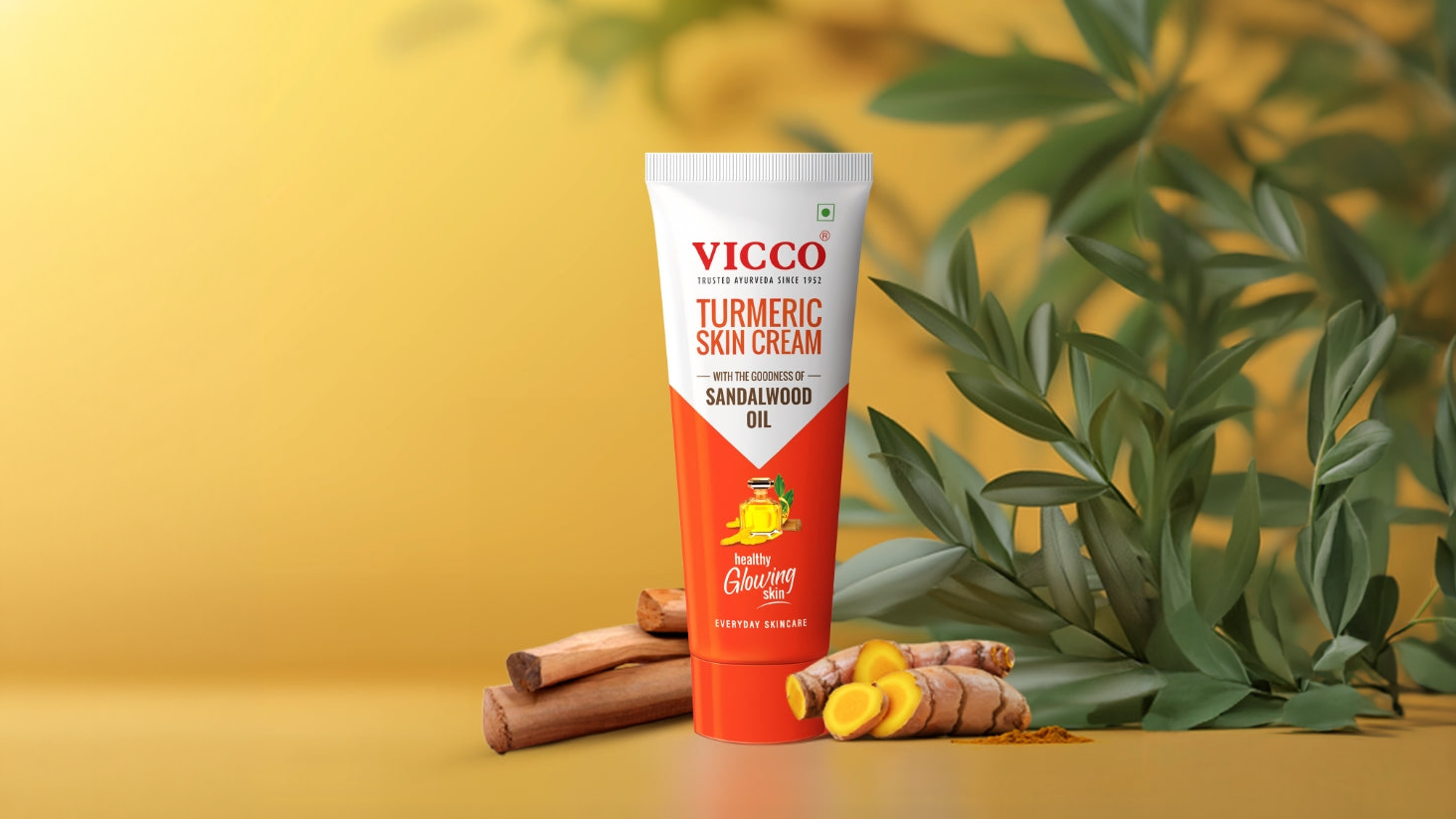
Vicco Laboratories has run its most famous jingle, “Vicco Turmeric, nahin cosmetic,” in more or less the same form since 1979. There has never been a Bollywood star fronting the brand. There has rarely even been a facelift to the tone of the advertising.
Keshav Pendharkar founded Vicco in 1952 on a simple bet: Indian consumers would trust an ayurvedic skin cream built around turmeric more than a cosmetic one built around synthetic actives, provided the brand never confused the two positionings. Vicco Turmeric Skin Cream and Vicco Vajradanti, its ayurvedic toothpaste, have both held onto meaningful share in their categories for decades without a single season of celebrity endorsement.
That restraint has aged unusually well. Personal care in India now runs through a rotating cast of influencers and Bollywood faces, most of whom stay attached to a brand for one contract cycle before moving to a competitor. Vicco’s jingle, unglamorous and unchanged, has outlasted every one of them. Consumers who grew up hearing it now hear it with their own children, which is a kind of brand equity money alone struggles to buy.
CavinKare built an entirely different kind of disruption, on price rather than restraint, but with the same instinct: don’t wait for a celebrity to validate the product. Ghadi Detergent proved a brand can beat a multinational without a single television star. Lahori Zeera is proof the no-celebrity playbook is still winning categories today, not just in the 1980s.
Consistency, it turns out, can be a stronger asset than star power. It just takes forty years to prove it.