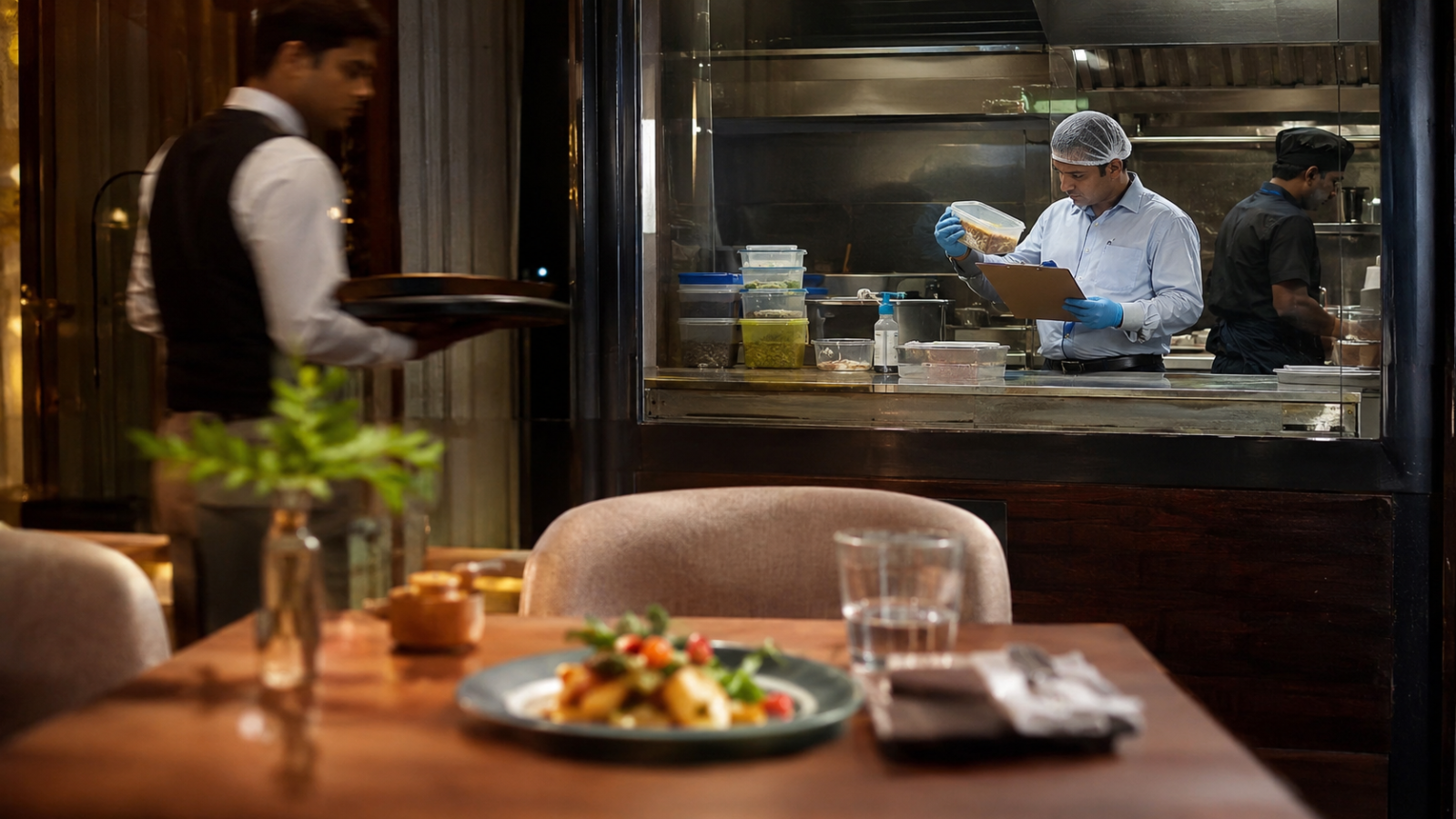
A restaurant can spend years building a brand and lose consumer trust in a single viral video. That is becoming increasingly clear as food safety authorities across India step up inspections of restaurants, food chains and food businesses. In Maharashtra alone, recent inspections have targeted more than 100 outlets of major chains including Domino’s, KFC, Pizza Hut, McDonald’s, Subway, Burger King and Starbucks. Four Domino’s outlets and a Pizza Hut outlet had their licences suspended following reported hygiene and food safety violations.
For consumers, these are food safety stories. For marketers, they should be brand stories.
The brand promise ends in the kitchen
Every restaurant makes a promise. It may be communicated through advertising, packaging, interiors, influencers or a carefully designed Instagram feed. A premium restaurant promises quality. A family restaurant promises safety and reliability. A global chain promises consistency.
But consumers ultimately judge those promises through experience. This is the same principle that applies across categories. As we explored in our recent look at how Vahdam Teas used design to build a premium brand experience, every consumer touchpoint contributes to what a brand means.
For restaurants, however, the most important touchpoint may be the one consumers never see: the kitchen. If the food is unsafe, the brand has failed at the most basic level.
The viral video problem
Food safety violations are not new. What is new is how quickly they become public. A customer complaint can now become a Reel. An inspection can become breaking news. A photograph from a kitchen can circulate to thousands of potential customers before the restaurant has even formulated a response.
That makes reputation increasingly difficult to separate from operations. The lesson is particularly relevant as Indian consumer brands become more ambitious about growth. Our recent Brand of the Month analysis of India’s leading FMCG brands showed how companies are investing heavily in distribution, acquisitions and brand building. But scale only makes the underlying brand promise more important. A bigger brand also has more to lose when that promise breaks.
Trust cannot be advertised into existence
This is perhaps the biggest lesson for food brands. Marketing can create awareness. It can create desire. It can even create an expectation of quality. But it cannot permanently compensate for poor operations.
A useful comparison comes from another category we have examined on Brand Digest. In our analysis of how brands use packaging to communicate premium positioning, the central lesson was that every visible brand signal needs to support the positioning.
For restaurants, the same principle works in reverse. Beautiful interiors, premium packaging and polished advertising create an expectation. Hygiene and food safety have to deliver on it.
The Brand Digest takeaway
The recent food safety controversies across India are a reminder that a brand does not live inside its logo, campaign or social media feed.
It lives in the experience.
For restaurants, that experience begins long before the plate reaches the customer.In an age where every diner carries a camera and every incident can become content, the kitchen is no longer behind the brand.
The kitchen is the brand.