Every detergent brand in 2005 ran the same ad. A muddy shirt. A smiling housewife. A pack of powder. Clean shirt. The end.
Surf Excel’s brief to Lowe Lintas was different: what if we did not talk about cleaning at all?
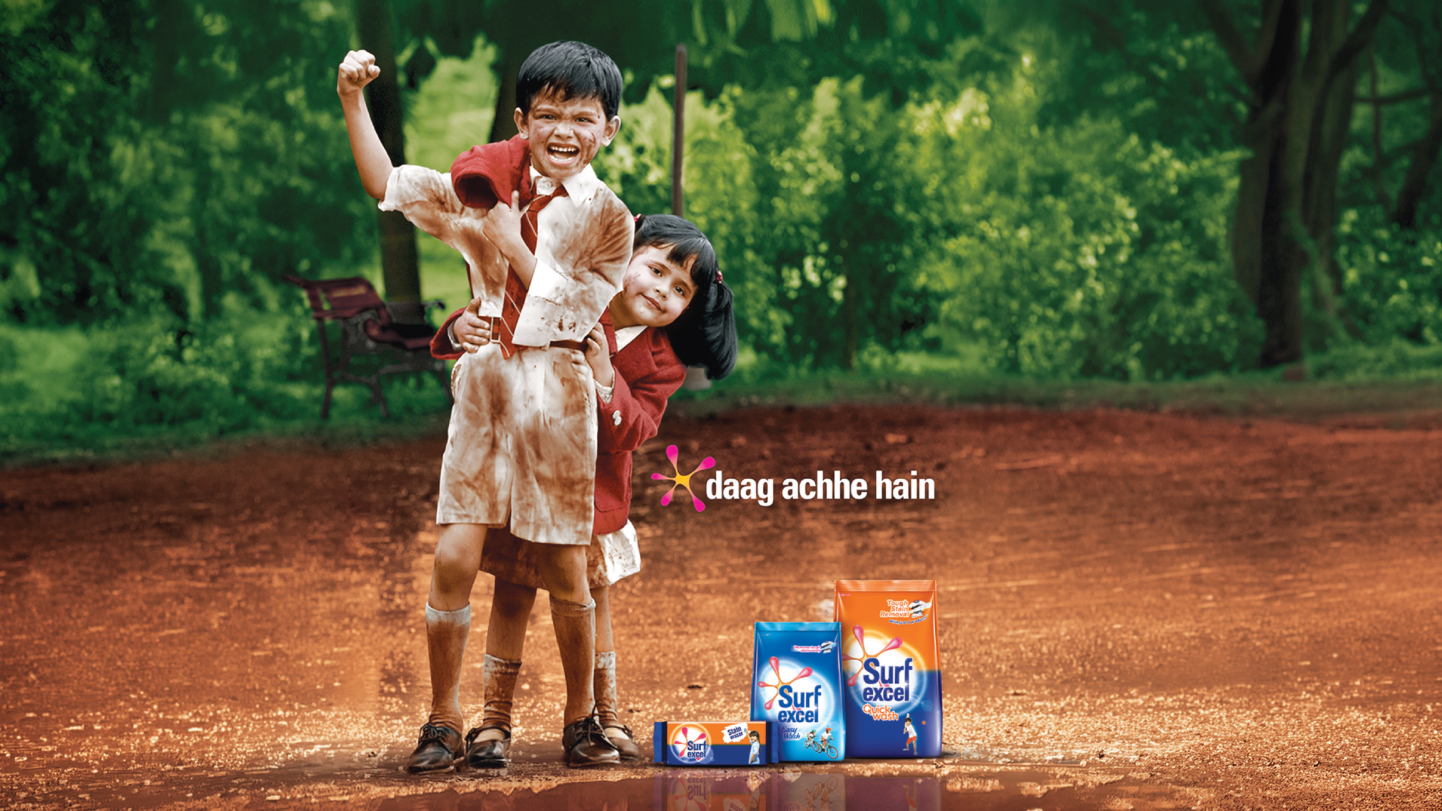
“Daag Acche Hain” (Dirt is Good) reframed the insight entirely. Dirt is not the enemy. Dirt is evidence that a child lived their day fully, helped a friend, played without holding back. The product’s job is to handle the mess so children do not have to.
The campaign ran a series of emotionally precise films. A boy sits in a puddle to cheer up a girl in a white dress. A child helps an elderly man cross the road and comes home covered in mud. None of the films showed cleaning. None mentioned ingredients. None showed before-and-after.
This is the full inversion of category advertising: instead of making the stain feel like a problem, Surf Excel made the stain feel like evidence of good parenting.
The platform ran for over 15 years. It became one of India’s most recalled brand ideas. And Surf Excel maintained its premium price point in a category where every competitor was fighting on cleaning performance claims.
How Fevicol held a single brand idea for 60 years without variation and became the category in consumers’ minds is the closest parallel: both brands made the product’s category-level benefit feel like a philosophy, not a feature.
How Lifebuoy used a public health insight to transform its brand without ever talking about soap performance shows the same principle: the most powerful FMCG campaigns address the consumer’s world, not the product’s specification sheet.
[How Amul’s Amul Girl built cultural relevance for 60 years without explaining why butter is better completes the lesson: iconic Indian FMCG brands compete on meaning, not on claims.