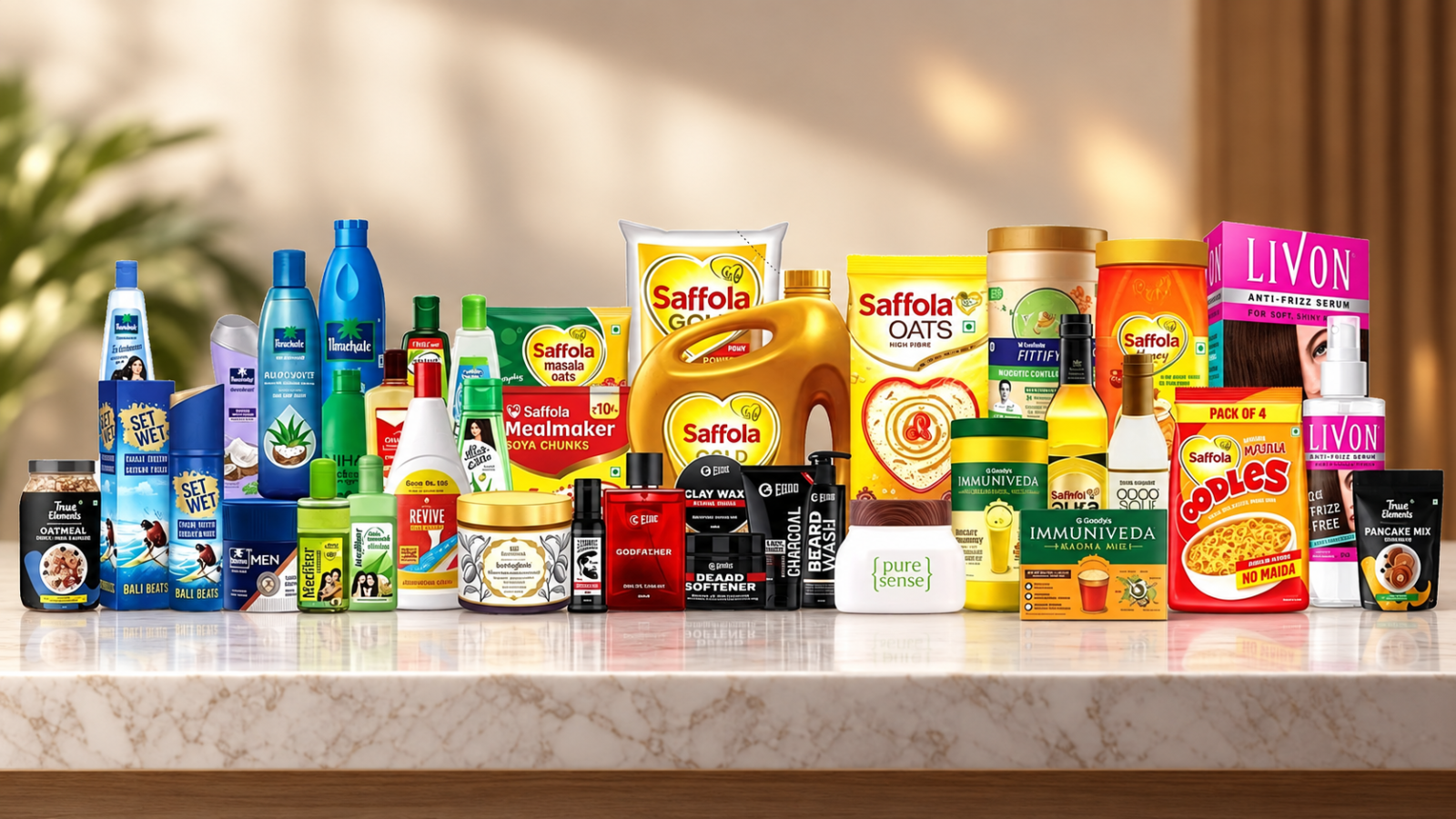
Marico sells two grooming brands to roughly the same young Indian consumer, and has deliberately never let them tell the same story.
Set Wet, built through its hair gel, deodorant and styling range, has always sold attitude first and formulation second, running youth culture, confidence-led advertising aimed at how a young man wants to feel walking into a room. Livon, Marico’s hair serum brand, has built its identity almost entirely on solving a visible, everyday problem: frizzy hair, dryness, split ends, sold with practical, almost clinical reassurance rather than swagger.
Both brands sit in the same broad personal care aisle, sometimes on the same shelf, aimed at overlapping audiences. Neither cannibalises the other, because neither is really competing on the same emotional job. One sells confidence. The other sells a fix. A consumer reaching for Set Wet is answering a different question than a consumer reaching for Livon, even on a morning they might buy both.
Most companies with two products in the same aisle end up making them compete with each other for the same story. Marico’s approach shows what happens when a portfolio deliberately avoids that trap: each brand gets to own one job completely, instead of splitting attention over two half-owned ones.
Zepto built its entire identity around owning exactly one attribute completely, a discipline Set Wet and Livon are both applying at the portfolio level. Nykaa’s content-first, attitude-led approach to beauty mirrors what Set Wet does in the grooming aisle. Paper Boat shows how far an emotion-first brand story, rather than a product-first one, can carry a mass market FMCG line.