Britannia was founded in 1892 in Calcutta. For a century, it meant biscuits: affordable, functional, trusted. Marie Gold. Glucose. Bourbon. Bread.
By 1997, Britannia was profitable but stagnant. The mass biscuit market was a margin war. Parle was entrenched below. New entrants were nibbling at the top. The brand had no clear reason for consumers under 30 to feel excited about it.
Sunil Alagh joined as MD and made a decision that defined the next decade: Britannia would move upstream. Not abandon the mass market, but create a premium tier that gave the brand cultural energy.
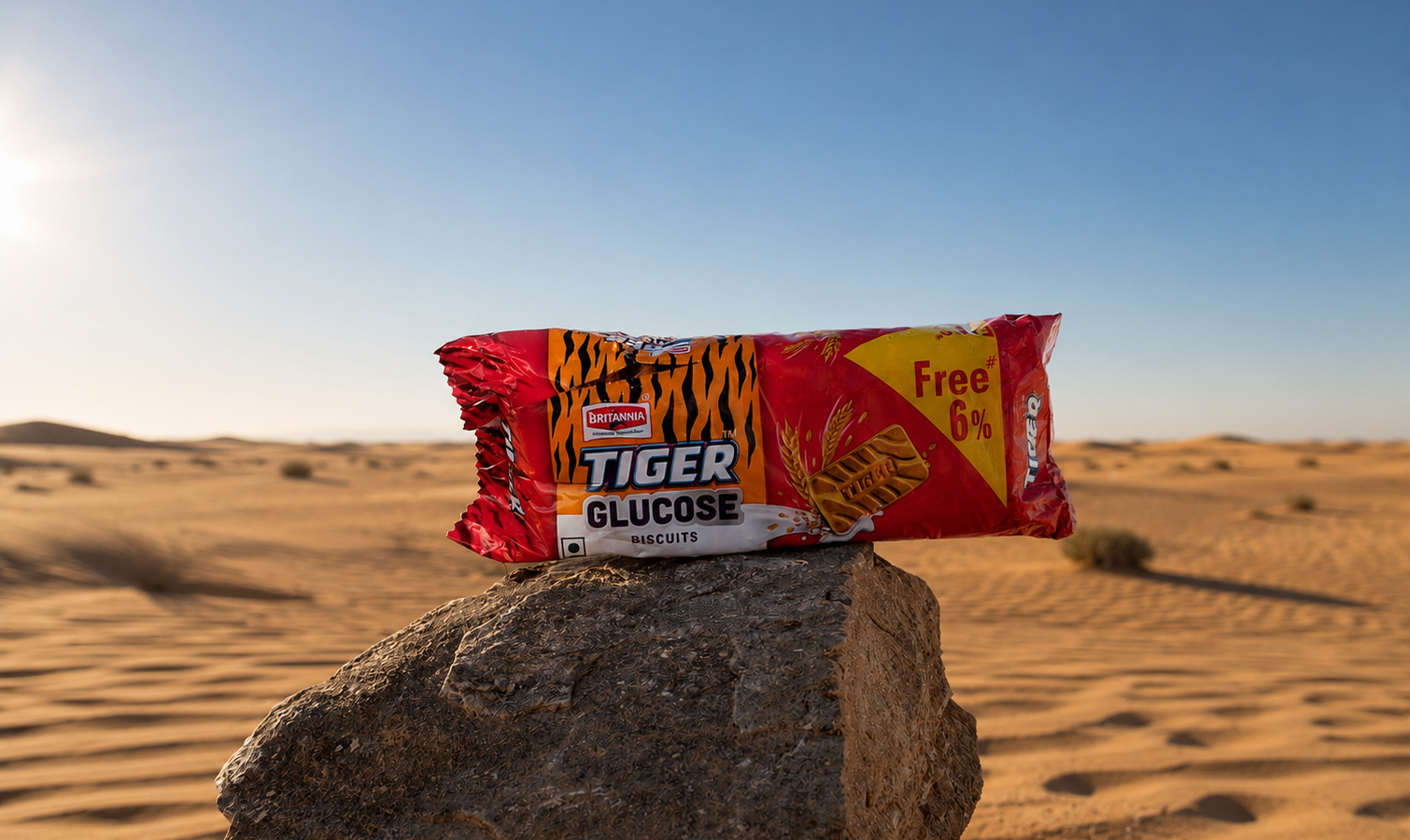
The 50-50 cookie in 1993 and Tiger biscuits in 1994 were the experiments. Tiger was the revelation. A biscuit designed for children with a tiger mascot sold 160 crore packs in its first year. Not because it was radically different, but because the branding was radically younger and more energetic than anything Britannia had done before.
Tiger proved Britannia could talk to a new generation. The learnings moved upstream.
NutriChoice launched as India’s first health-positioned biscuit range. Good Day butter cookies went from a commodity product to India’s bestselling cookie. Treat creme biscuits took on Oreo before Mondelez entered India seriously.
How Parle-G built distribution dominance through value pricing while Britannia climbed upstream, showing both strategies can win simultaneously in the same category reveals the contrasting logic: one brand went deep into value, the other climbed upstream. Both won.
The brand tagline shift to “Eat Healthy, Think Better” in 1997 was not a product claim. It was a repositioning of what Britannia stood for. Biscuits were no longer snacks. They were nutritious food choices.
Nusli Wadia’s acquisition of the company in the early 2000s brought in fresh capital and management clarity. Britannia’s revenue grew from ₹1,000 crore in 1997 to ₹16,000 crore in FY24.
How ITC Aashirvaad built India’s largest branded atta by treating a commoditized food category as a trust-building opportunity parallels Britannia’s insight: Indian food categories that seem price-locked are rarely as immovable as they appear to incumbents.
The premiumization worked because Britannia never pretended the mass market did not exist. Good Day and Tiger and Marie Gold kept the volume engine running. NutriChoice and Milk Bikis added margin and modern trade shelf presence. The portfolio was the strategy.
How Dabur held multiple brand tiers simultaneously without diluting its core consumer promise across 135 years of category evolution is the closest portfolio parallel: anchor one trusted name across multiple consumer occasions.