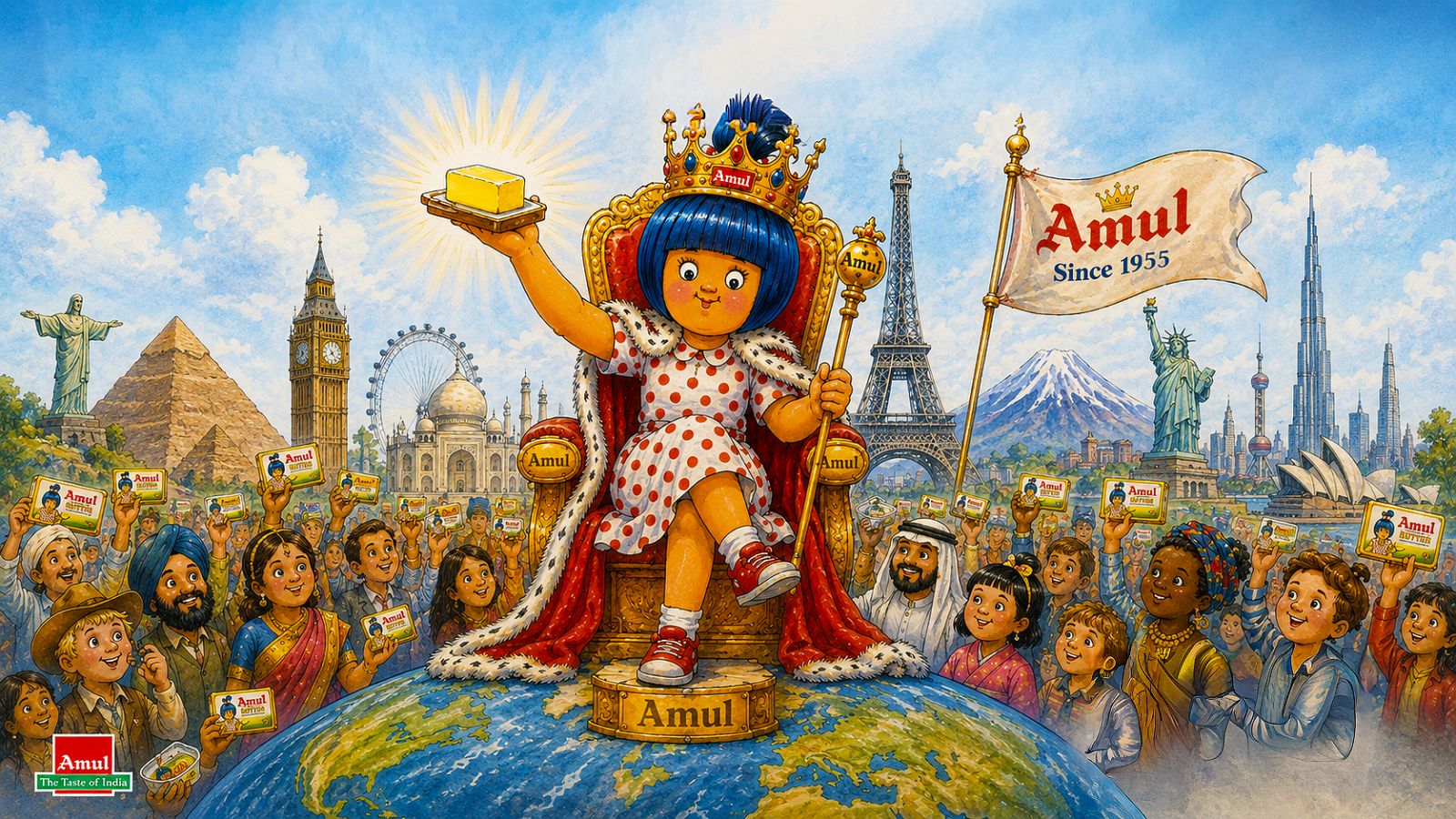
In October 1966, Sylvester daCunha sat in a Mumbai ad agency and sketched a small girl in a red polka-dot dress holding a pack of Amul butter. He called her the Amul Girl.
Sixty years later, she’s still at it.
The topical ad format is deceptively simple: take the biggest news story of the week, write a pun, stick the Amul Girl in it, and put it on hoardings within 24 hours. No A/B testing. No focus groups. Just fast, funny, and sharp.
What makes it genius is what it replaces. Amul never needs to run awareness campaigns because the Amul Girl is always inside the cultural conversation. Every topical ad becomes free PR, shared by journalists, cricketers, and ordinary consumers who see themselves in it.
The real insight: Amul didn’t build a brand that sells butter. It built a brand that reflects India back at itself. The butter is almost incidental.
And because GCMMF, Amul’s parent cooperative isn’t chasing quarterly margins for shareholders, the strategy has survived for six decades unchanged. That institutional stability is what lets the Amul Girl keep going through recessions, elections, and everything in between.
Key Takeaways
1. Cultural relevance at speed beats expensive awareness campaigns every single time.
2. Organizational structure shapes brand strategy more than most founders realize and long-term stability is itself a competitive advantage.