The dry fruits market in India is enormous and almost entirely unorganised.
Walk into any wholesale market in Delhi, Mumbai, or Ahmedabad and you find cashews sold by the kilo, almonds measured out in paper bags, raisins weighed and wrapped in newspaper. No brand. No origin label. No quality certification. Price and the shopkeeper’s word are the only quality signals the consumer has.
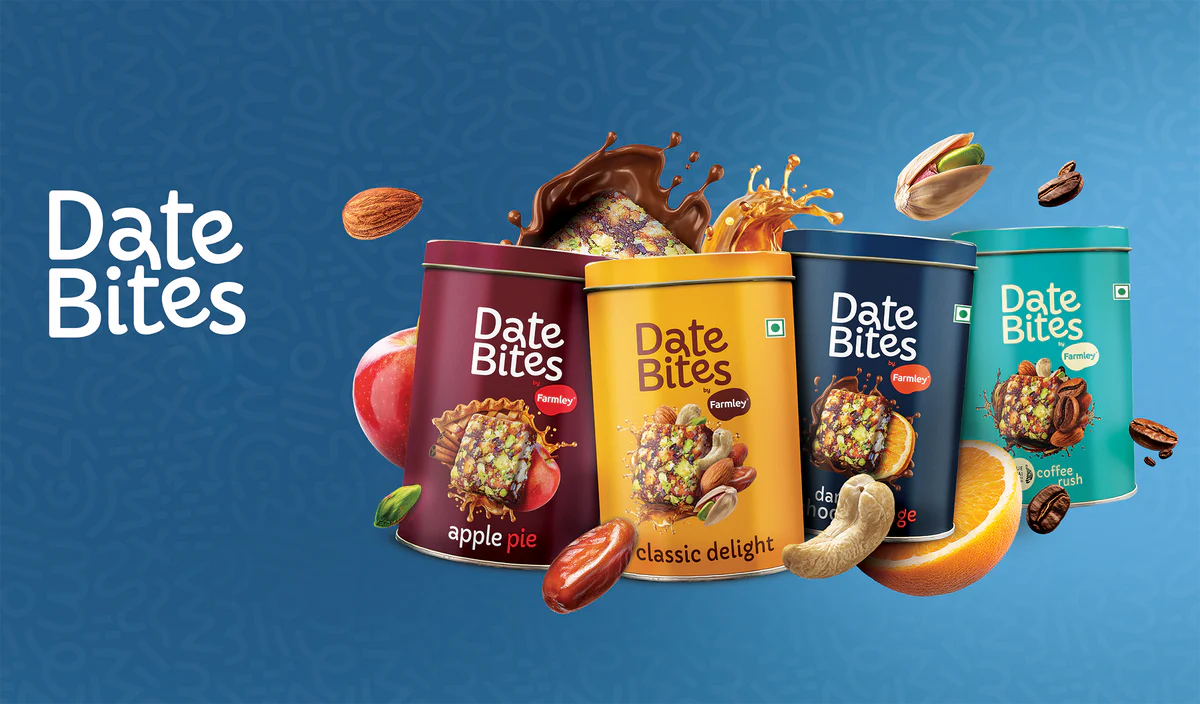
Farmley launched in 2021 with a straightforward proposition: branded, traceable, clean-pack dry fruits at a premium that the consumer can verify by looking at the product itself. The range expanded to 100+ SKUs including trail mixes, makhana snacks, and natural dried fruits.
Revenue reached ₹370 crore. L Catterton invested $40 million. Farmley now targets ₹1,000 crore revenue within 2.5 years, with offline expansion into south and east India already underway.
The underlying logic is one of the most reliable in Indian FMCG history: take a category that has been sold loose, unbranded, and undifferentiated for generations, put it in a sealed pack with a name on it, and give the consumer a reason to trust that name. Repeat.
Tata Salt did this with sodium chloride and built ₹1,500 crore of brand value on what is chemically identical to unbranded salt. The mechanism was identical: trust the name because the product itself gives you no way to verify quality.
Parachute did this with coconut oil: put it in a sealed blue bottle, make the seal mean something, and let the bottle become the quality signal in a market where the alternative was oil ladled from an unmarked tin.
Farmley is doing the same with almonds. The category does not need to be glamorous for branding to work. It needs to have a trust gap that a credible name can fill.
The almond does not know it is in a Farmley pack. The consumer does, and that is the whole business.