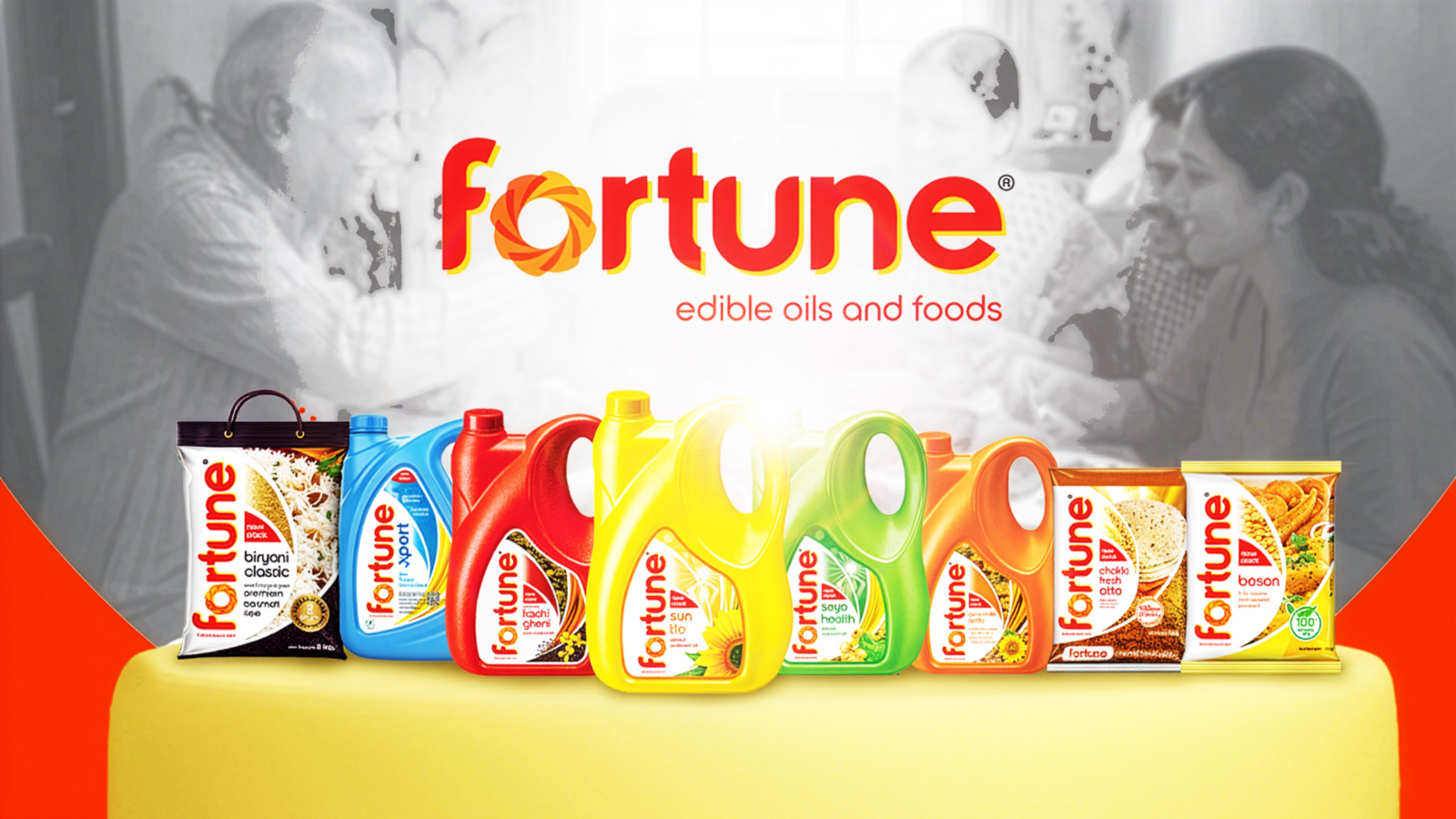
Fortune was launched in 1999 by Adani Wilmar, a joint venture between the Adani Group and Singapore’s Wilmar International, at a time when most Indian households bought cooking oil loose, by weight, from a local shop with no brand attached to it at all.
There was no dramatic campaign that made Fortune India’s largest selling edible oil brand. There was, instead, a relentless build out of refining capacity, packaging and kirana distribution across soyabean, sunflower, mustard and rice bran variants, until a branded, sealed bottle of oil became the default choice in more Indian kitchens than any unbranded alternative. Fortune later extended the same trust into rice, pulses, besan and soya chunks, treating the original oil brand as a stamp of quality rather than a single product line.
The category Fortune won in is one where consumers genuinely cannot judge quality by looking at the product. Two bottles of refined oil look identical on a shelf. What Fortune sold, more than any specific formulation, was the certainty that the bottle contained exactly what the label said it did, at a price a kirana shopper could justify week after week.
Blinkit’s push into private label groceries is chasing the same trust-through-consistency advantage Fortune already built over two decades. Minimalist’s acquisition by HUL shows how much large FMCG capital is now chasing brand trust in categories once thought too commoditised to differentiate. [Tata’s purchase of Ching’s Secret makes the same point from the acquisition side of the table.