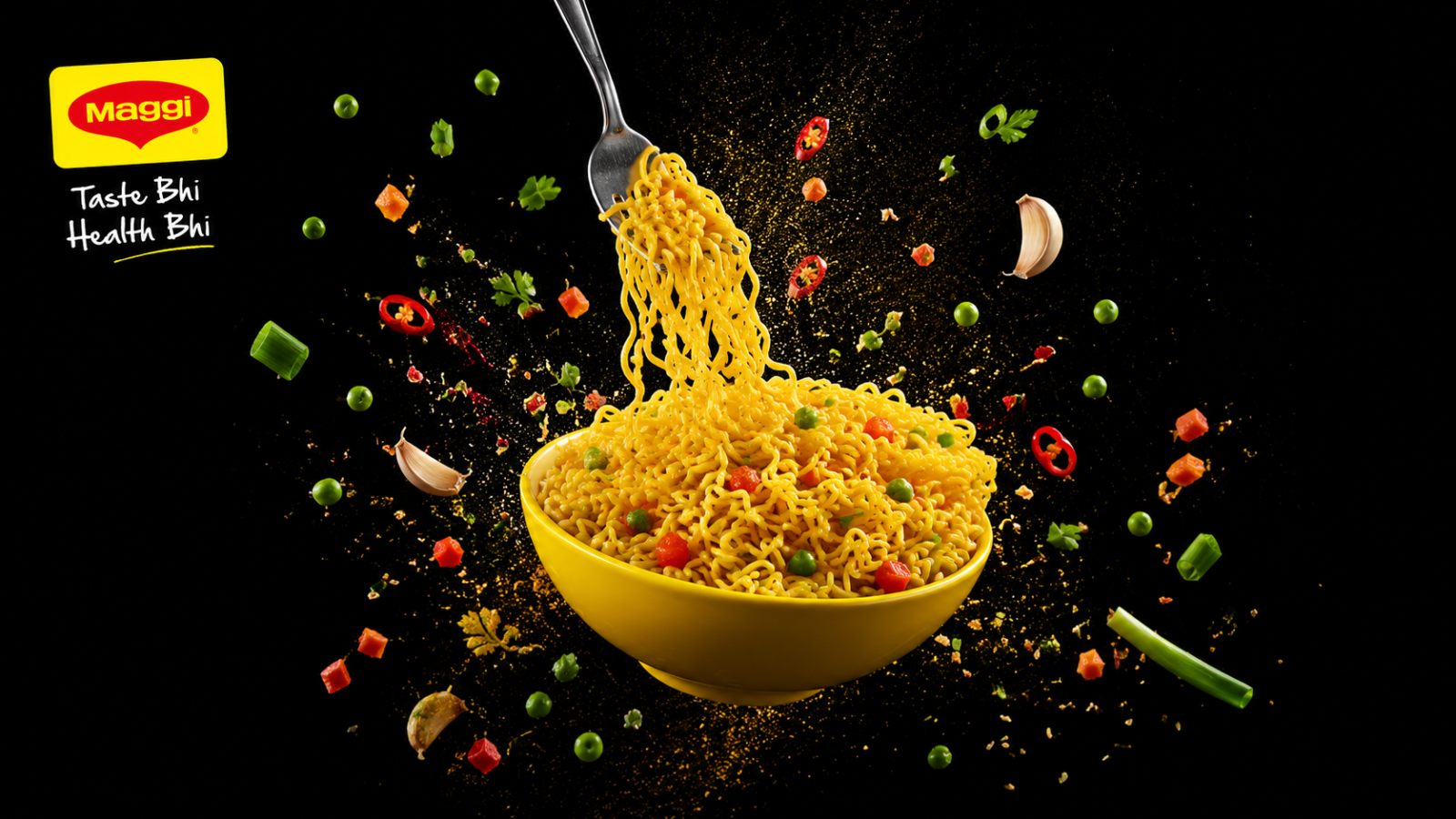
On 5 June 2015, Nestle India issued the largest food recall in Indian history. Maggi, which held 80% of the instant noodle market was pulled from shelves after regulators found elevated lead levels in test samples.
Nestle’s India MD Suresh Narayanan had a choice: fight the regulators publicly, or take the hit and control the narrative quietly. He chose the latter. The stock was destroyed. Production stopped. No combative statements were issued.
While competitors rushed to fill the gap Patanjali launched Atta Noodles, ITC pushed Yippee harder none could replicate what Maggi had: 32 years of taste memory. Indian families had grown up on that specific flavour profile. The masala tastemaker had a formula no competitor’s R&D team had matched.
When Maggi returned to shelves in November 2015, it sold out in hours. Suresh Narayanan later called it the brand’s “second launch.” By 2019, Maggi had recaptured over 60% market share.
The lesson wasn’t crisis management. It was category ownership. When you own a category in a consumer’s sensory memory, you can survive almost anything, including being absent for five months.
Takeaways
1. Taste memory is the strongest form of brand loyalty; almost impossible for a competitor to manufacture.
2. In a product crisis, silence and decisive action beat defensive PR every time.