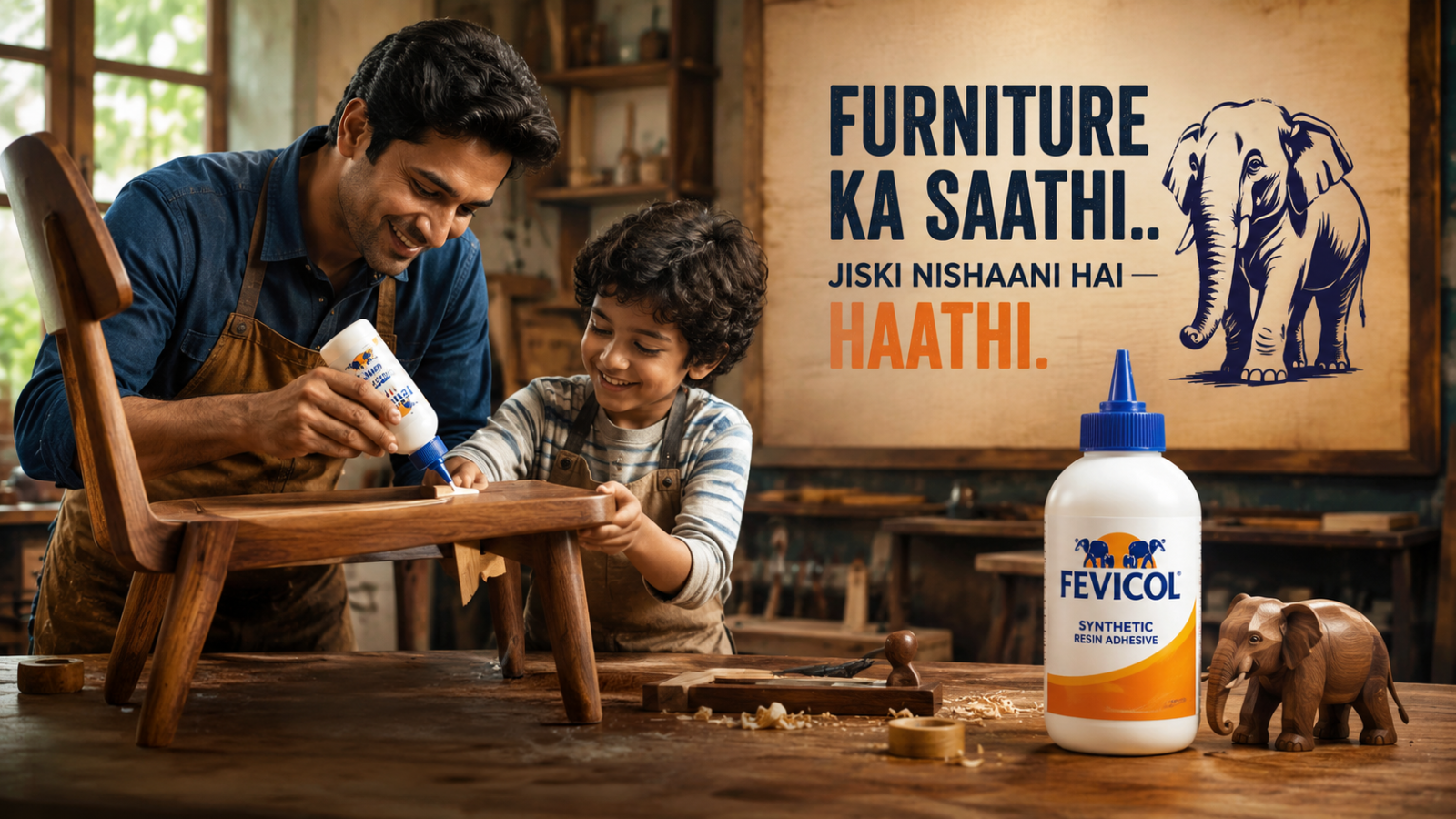
Balvant Parekh founded Pidilite in 1959 with a white synthetic adhesive he sold to furniture makers in Mumbai’s carpenter colonies. The product has barely changed since.
What changed was everything around it.
In 1998, Pidilite briefed O&M with the simplest possible instruction: show that the bond is unbreakable. What followed were some of the most awarded campaigns in Indian advertising history; a bus overloaded beyond physics that doesn’t fall apart, an egg that refuses to crack, a chicken that survives a pot of boiling water.
None of the ads mention the formula. None explain ingredients. They simply demonstrate, with absurdist humour, that the bond holds no matter what.
The result: Fevicol became the only adhesive brand that someone who has never bought glue could name. Carpenters swear by it not because they’ve rigorously tested alternatives, but because the brand promise has been embedded in their memory since childhood.
Pidilite now holds 70% market share in the Indian adhesive category. Fevicol is studied at IIMs and submitted to Cannes Lions in the same breath.
The product didn’t win. The idea of the product won.
Takeaway
1. Own one idea completely, “unbreakable bond” and express it without variation across every single ad.
2. Brand becomes category when consumers cannot imagine an alternative.