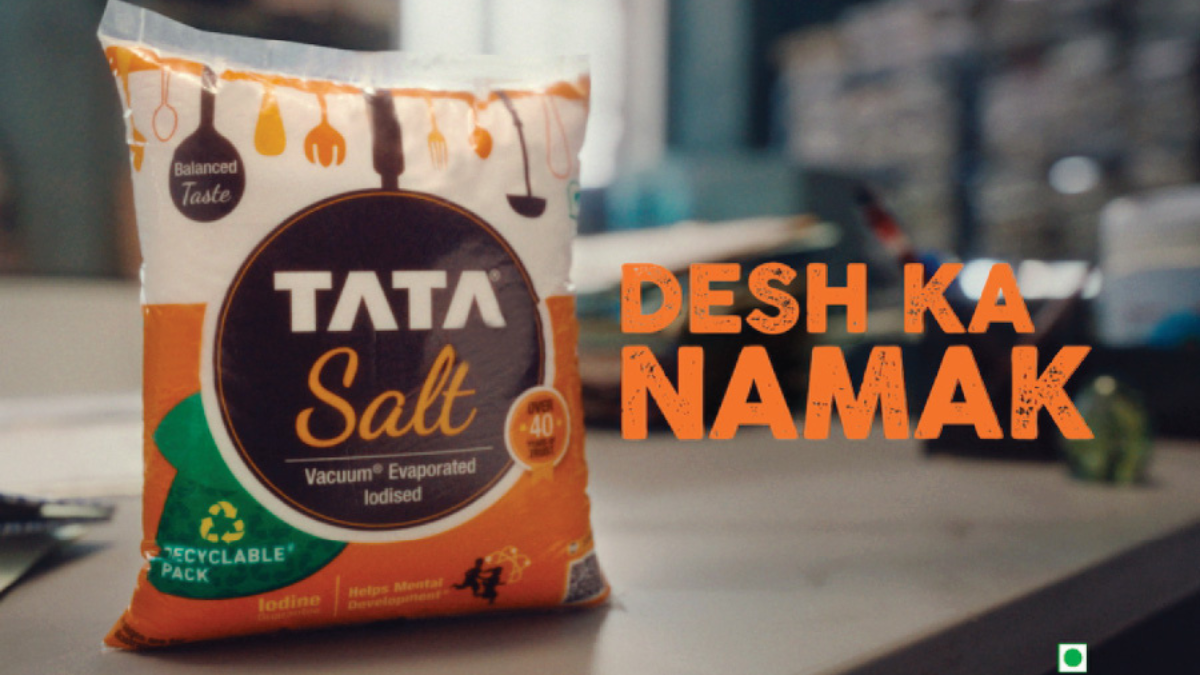
In 1983, Tata Chemicals launched Tata Salt as part of a government collaboration to provide iodized salt to India’s iodine-deficient population. It was a public health initiative as much as a commercial one.
The original positioning was functional: iodized, pure, vacuum-evaporated. It worked. Tata Salt found market share because its quality signal (the Tata name) was genuine in a category where quality was genuinely invisible.
The transformation came in the early 2000s when the agency created the line “Desh ka Namak” (salt of the nation). The campaign connected salt to Indian identity, Indian trust, and Tata’s own 100-year legacy of nation-building.
The strategic insight was elegant: you cannot differentiate salt on taste or texture in any way a consumer can verify. So differentiate on meaning. What does it mean to buy this salt? It means trusting the Tata name. It means choosing Indian enterprise. It means something beyond the packet.
How MDH Masala built brand trust through a founder’s personal reputation rather than any product claim or certification, shows a different route to the same destination: when a product cannot be differentiated on sensory grounds, the brand’s human story becomes the differentiator.
The Tata Group’s reputation did the functional work that no formula could. Tata Salt was perceived as purer, safer, and more trustworthy than competitors with identical iodization standards, because the Tata name had 150 years of integrity behind it.
Hindustan Unilever’s Captain Cook salt could not compete on this terrain. Neither could any private label. The brand equity lived entirely in the name and the story attached to it.
How Aashirvaad atta used the ITC corporate guarantee to create a premium tier in a category that everyone assumed was permanently commoditized mirrors Tata Salt’s logic: Indian consumers will pay a brand premium for a commodity if the corporate name behind the product carries real meaning.
Tata Salt was merged into Tata Consumer Products in 2020. Its revenue stands above ₹1,500 crore. It remains the largest branded salt in India by volume.
How Dabur used 135 years of Ayurvedic heritage to maintain brand trust across product categories without ever having to explain what it stood for in advertising is the closest parallel: great Indian FMCG brands do not describe their values. They have earned them over generations, and consumers carry those values into every purchase.
In commodity categories, the winner is not the brand with the best product. It is the brand with the best story.