In December 2018, Hindustan Unilever agreed to merge with GlaxoSmithKline Consumer Healthcare’s Indian business in an all stock deal valued at roughly ₹31,700 crore, the largest consumer goods transaction India had seen. The merger completed in April 2020. Separately, HUL exercised an option in the original agreement to buy the Horlicks brand for India outright from GSK’s UK parent for ₹3,045 crore.
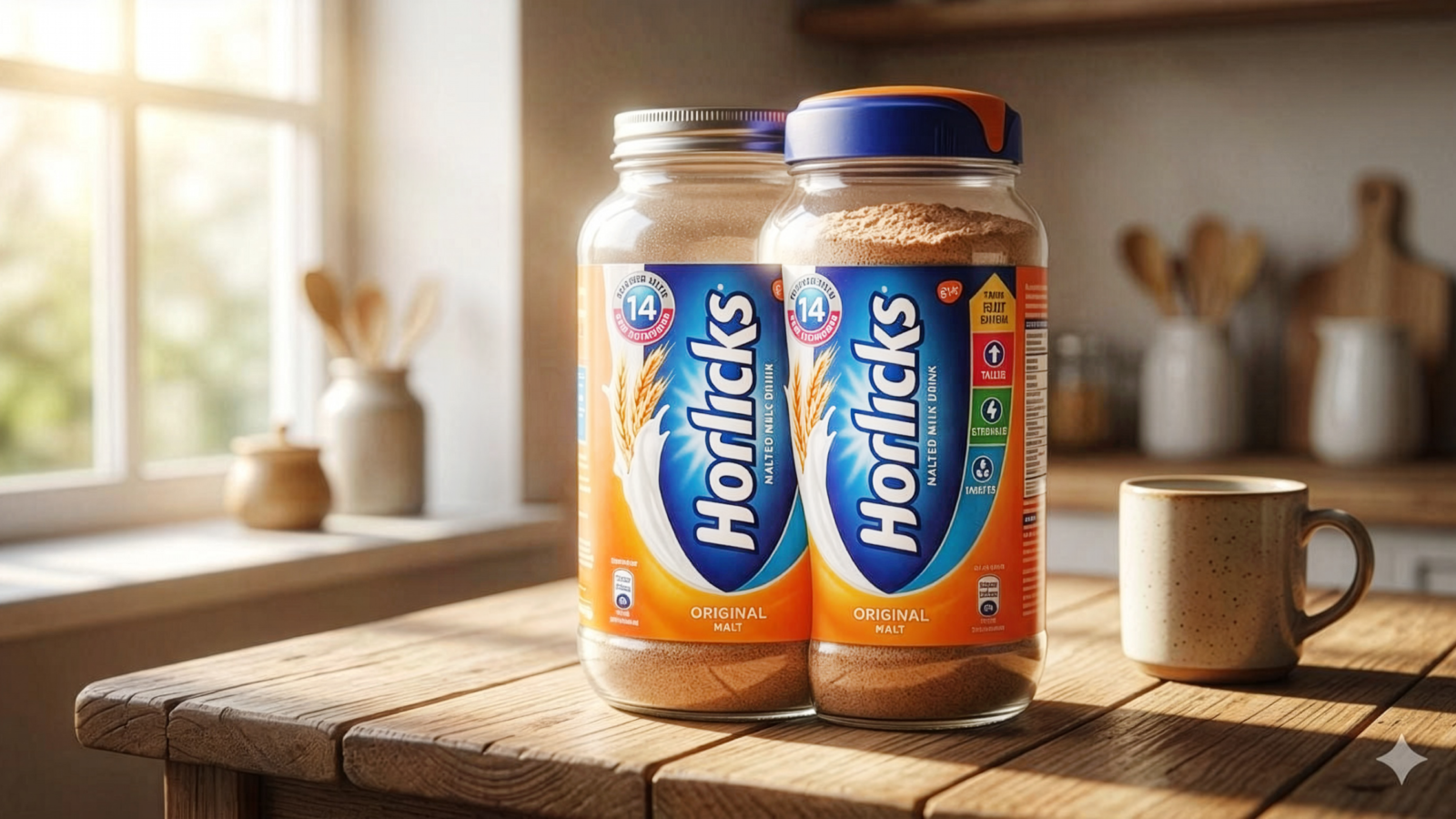
Horlicks had been sold in India since the 1930s. By the time HUL took it over, the brand wasn’t really competing on nutrition claims anymore. It was competing on habit: a glass of warm milk before bed, mixed by a parent, in millions of Indian homes, every single night, for generations.
That is what HUL was really buying. Formulations can be reverse engineered and ingredient claims can be matched by a competitor within a year. A bedtime ritual embedded across three generations of a household cannot be built with a marketing budget, however large. It has to be inherited.
The bet also gave HUL a beachhead in the health food drinks category against Complan, still owned separately, and Bournvita, then under Mondelez. Rather than build a new health drink brand from scratch and spend a decade earning trust, HUL paid up front for a habit that already existed.
Minimalist shows HUL running the identical logic more recently, in skincare instead of nutrition. Tata’s acquisition of Ching’s Secret and ITC’s purchase of Yoga Bar both follow the same reasoning: buy the behaviour a challenger has already built, rather than trying to manufacture it from scratch.