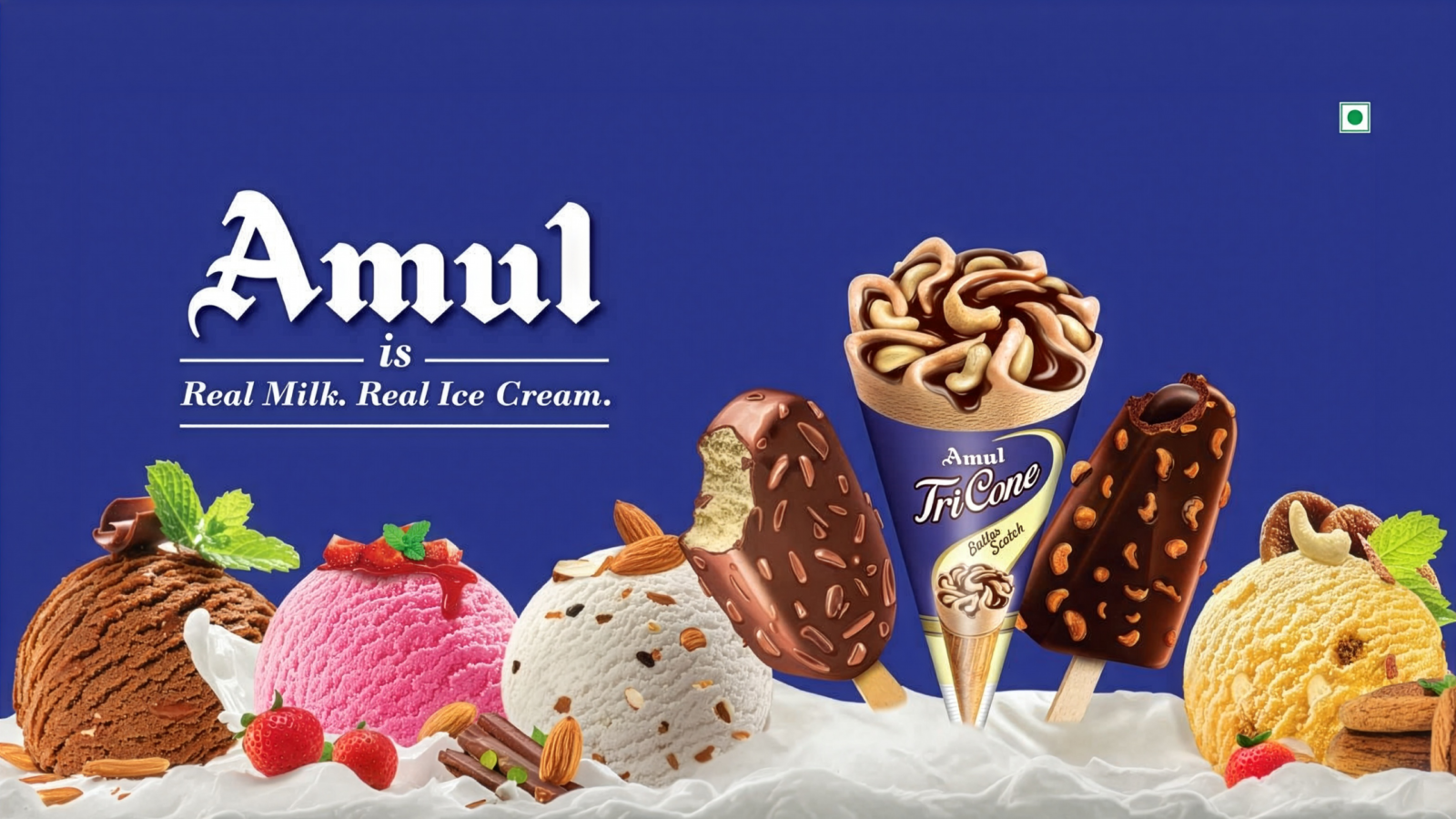
Amul, run by the Gujarat Cooperative Milk Marketing Federation, entered the branded ice cream category against a well entrenched Hindustan Unilever brand, Kwality Walls, and did something a listed multinational structurally cannot do as easily: it kept prices consistently lower, year after year, without needing to protect a shareholder margin on top of its costs.
Because Amul procures milk directly from its network of farmer cooperatives rather than through a corporate supply chain built for shareholder returns, it can sustain a lower price point on ice cream while still remaining profitable for the cooperative and its member farmers. Kwality Walls, competing as part of a global consumer goods company with its own margin expectations, could not match that price indefinitely without hurting its own profitability targets elsewhere.
By the mid-2010s, Amul had overtaken Kwality Walls to become India’s largest ice cream brand by volume, built on aggressive parlour expansion, modern retail presence, and a dairy heritage consumers already trusted implicitly from decades of buying Amul milk and butter.
Blinkit’s push into private label groceries is chasing a similar structural cost advantage, cutting out a layer of margin that established FMCG brands have to protect. Lahori Zeera’s regional-first rise shows how a challenger without a corporate cost structure can still out-compete a multinational on price. Ghadi Detergent proved the same thing against Surf Excel a decade earlier, in an entirely different category.
Amul didn’t need a bigger ad budget than Kwality Walls. It needed a business model that let it charge less and still make money.